About
Mah Jongg, through a mathematician’s eyes.
A mathematics professor bringing an analytical approach to American Mah Jongg.

Meet Dr. D-N
Dr. Christopher Dubbs-Nazario
Mathematician, educator, and founder of MahjPhD.
Ask most people what mathematics is and they’ll say “numbers.” Ask a mathematician and you’ll likely hear something different: mathematics is the study of patterns — noticing them, describing them, and understanding why they hold.
That’s the lens Dr. Christopher Dubbs-Nazario brings to American Mah Jongg. A mathematics professor with a PhD in mathematics education, he has spent his career helping people find the structure hiding inside things that first look complicated.
Through MahjPhD, he teaches American Mah Jongg according to National Mah Jongg League (NMJL) rules, with classes at the JCC of the Lehigh Valley and private lessons for individuals and small groups.
Why MahjPhD
Mah Jongg is a game of patterns.
Every line on the NMJL card is a pattern. Evens and odds, like numbers, consecutive runs, dragons that match or oppose a suit — the card is a catalog of structures, and it changes every year.
Playing well means seeing those patterns early: which hands your tiles are quietly pointing toward, which hands share the tiles you already hold, and which ones the table is closing off. That’s pattern recognition under pressure — exactly the kind of thinking mathematics trains.
MahjPhD brings that perspective to the table without taking the fun out of the game. The goal isn’t to turn every player into a mathematician. It’s to help you see what’s in front of you more clearly, and understand why a decision makes sense.
“The card is a catalog of patterns. Learning to play is learning to see them.” Dr. D-N
Patterns in uncertainty
What the numbers can tell us.
Earlier in his career, Dr. D-N built computer simulations — models that play out thousands of possible futures to understand how an uncertain system tends to behave.
Mah Jongg is full of that kind of uncertainty. You never know which tile comes next. But play enough games — or simulate enough of them — and patterns emerge.
That’s the idea behind MahjPhD’s developing annual analysis of the NMJL card: using simulation to ask what the card actually tells us, and turning the answers into insight you can use at the table.
Launching February 2027 as MahjPhD Lab.
The card changes every year. So should our analysis.
- Which hands tend to come together most often?
- Which lean most heavily on jokers?
- Which stay flexible the longest?
- What changed from last year’s card — and does it matter?
Teaching philosophy
Understanding, not memorization.
Students leave a MahjPhD class able to do four things — on every turn, in every game.
Recognize
Notice the information that matters on your rack and on the table.
Evaluate
Weigh competing possibilities instead of chasing the first hand you see.
Decide
Make a deliberate choice — and know why you made it.
Adapt
Change course gracefully when the game gives you new information.
Beyond the classroom
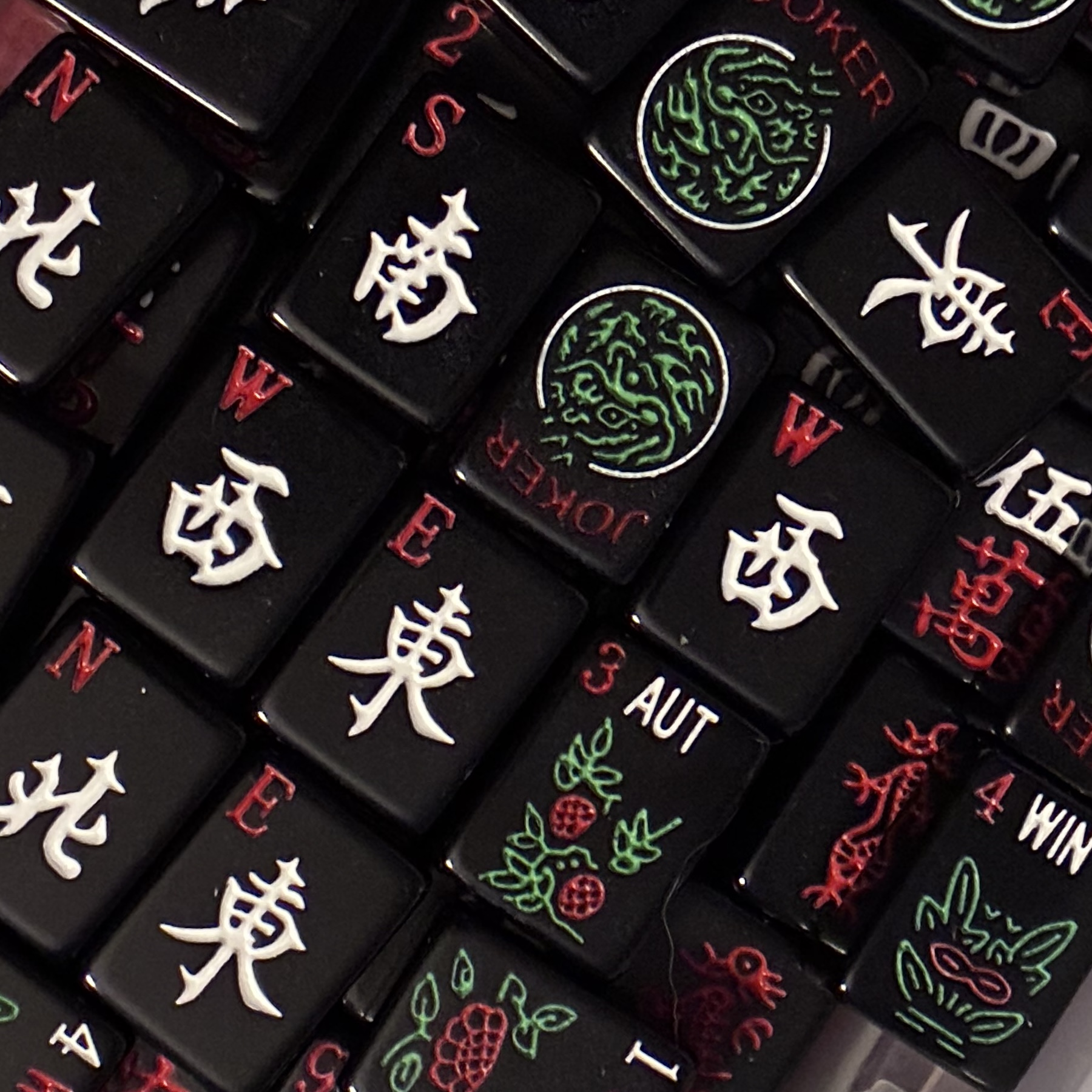
Also, he paints the tiles.
Dr. D-N’s affection for the game shows up away from the table, too — including this painting of Mah Jongg tiles. It’s a reminder that underneath the strategy and the numbers, this is a beautiful, social game worth enjoying.
Come learn at the table.
Join a scheduled class at the JCC, or bring your group together for a private lesson.
[email protected]